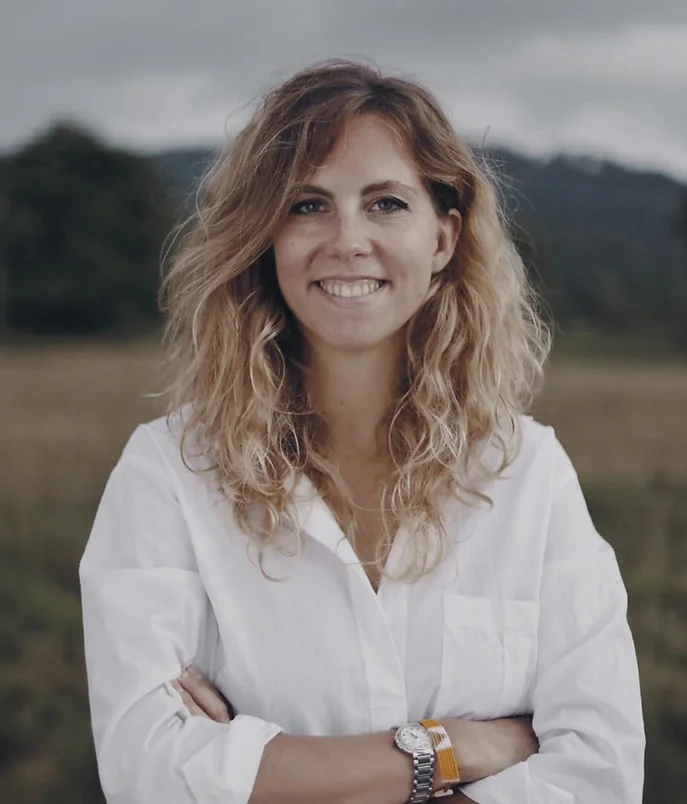
Siofra O'Donovan in interview abour her book ''Malinski'' - now coming out as an audiobook - inspirations, memories, stories

Siofra O’Donovan is one of those writers who is actively engaged in the life of a writer rather
than a life of self-promotion, presenting trivial content that has great market value and offers
a good product ready for consumption. She comes from Wicklow, Ireland.
She has a great body of work as a writer and leads creative writing workshops. In her career
she has published a variety of work such as travelogues (Pema and the Yak, 2006) and
(Lost in Shambhala, 2015) historical novels– Malinski, published originally by Lilliput Press.
She published a historical biography of Kevin Barry Yours Till Hell Freezes in 2020. She has
written a novel set in 12th Century France. She has written many cultural and travel features
for the Irish Examiner, the Irish Times and the Warsaw Voice. Being on the panel of Writers
in Schools Poetry Ireland as well as Writers in Prisons panel she teaches writing workshops
in schools, mental health and prison facilities where she is using the dynamic and archetypal
Hero;s Journey model based on the ideas of Joseph Campbell and many other tools. She is
now Writer in Residence in Dorlindon Forest Sanctuary where she teaches writing
workshops and is a storyteller for children and adults.
Link:
https://www.dorlindon.com/en/activities/creative-writing-and-storytelling/index.php
Her novel Malinski is out now as an audiobook which gave me a good excuse to ask her
some questions, which she kindly answered.

It always strikes me when there is this incredible touch of Otherness– an outsider and
a foreigner finds inspiration in the narratives of other countries. What brought your
interest in Poland?
Firstly, my first boyfriend in school was half Polish- his grandfather had a clock shop in Bray,
Co. Wicklow and his grandmother were James Joyce’s sister in law. I was intrigued by
them… I learned that he [grandfather] was from Lvov and that his brother or his uncle was
murdered in the Katrzyn forest by Stalin. I was also inspired by a trip I went on to Prague
with an architectural faculty in the early nineties.. Cigarettes called ‘start’ were 6p.
Beherovka became a flavour that I liked… the architecture was sublime and I loved the
oddness of being in a place that was having its very first Marlboro advert unfurled the week
we were there.. It was so strange… and going to the opera was about 3 euro… I thought,
this place is more civilised than where I am from… and then in my final year in college, a
Polish girl moved into my apartment and we became extremely good friends. She played the
music of Zbigniew Preisner and told me tales of Poland during the communist years-
underground jazz cafes, literary cabarets, oranges from Cuba at Christmas, queues for food
with vouchers that lasted hours… I was intrigued how people lived behind the ‘iron curtain’
all those years ago and besides– it had been lifted. She became one of my best friends and
is to this day.
My father had been a spy for the East German government in the 1960s and he perhaps
passed the intrigue with Eastern Europe on to me. I had a green card for the USA when I
finished college and ran away to Poland instead after I graduated. I couldn’t miss the
opportunity when Adam Mickiewicz University offered me a position in their English
Department. I was paid thousands and thousands of Zloties (Polish currency), that equated
to about 100 dollars a month! It was all so fascinating… I moved to Krakow and stayed for years.
I was ‘other’ but I also began to speak Polish fluently, and understood their mindset very well. I
was immersed. I taught English in universities and schools of English. I taught Piotr
Skrzynecki of Piwnica pod Baranami English in an ice-cream bar on Thursdays. He said it
was his dream to come to Ireland, but he was very ill. I’ll never forget visiting him in the
hospital. He had no hat, no cape, and I saw that his ears were as long and as large as a
Buddha’s and that he had a point on his crown- an Ushnisha. A Buddha King! He was an
extraordinary being. In fact I met his great protegée, Zbigniew Preisner, whose music is now
so famous, and whose music called my soul to Poland in my final year in college… The
question is… did I go BACK to Poland? It was so familiar to me. It was like a dream,
stepping onto the platform in Krakow Główny.. Into the warm air. I was home.
Maliński is the novel you wrote in a different reality, different mindset, with different
inspirations, aspirations. When you revisit it now - to what degree does it feel familiar
and yours now?
I still feel very connected to it, as it reflects my split mind between east and west. I still
feel that. I never feel fully Irish- because I’m not. My father’s side was full of
revolutionaries like Kevin Barry and my mother’s side were from Texas and Alabama,
and Australia. So I’ve never felt fully at home in Ireland despite that I now love it- apart
from the travesty that is in Dáil Éireann- I love the mythology, the land, the people. It is
a magical country. And Poland had its magic too - Piwnica pod Baranami, the
legendary cabaret founded by my hero and the muse of Malinski, Piotr Skrzynecki
(who is Piotr Salicki in Malinski). Also I want new life breathed into the book. The time
is now, when there is war.. Between Russia and Ukraine. Those shifting borders
where the story of Malinski begins, really shows what an illusion nationhood is.. At that
In 1939, Lvov was part of Poland. It was a city full of Jewish intelligentsia, great
art and culture. People used to say they could have their breakfast in Krakow, their
lunch in Lvov. All that changed with World War Two. Many Ukrainians were recruited
into the Einsatzruppen by the Nazis, and the Jews were aggressively exterminated. A
great tragedy.
I should say as well that I am deeply connected to Ireland by my father’s line, full of
revolutionaries like Kevin Barry and my grandfather, Jim O’Donovan. I had a great uncle
Gerard O’Donovan who was once the curate of Loughrea Cathedral in Galway. He ran away
in 1908, married a Protestant and had an affair with a novelist in the Bloomsbury Circle in
London. These ancestors anchor me to Ireland and a feel a mixture of pride and horror at
our history and the current state of affairs. It is through mythology and the land that I feel
most connected to Ireland. I can’t stand the parochialism and the politics.
Do you think that comparing different cultures in terms of their elements and
historical, anthropological, psychological aspects makes sense in today’s world
which seems so much less homogenous now than let’s say three decades ago?
Poland is still very different to Ireland. The smell, the land, the food, the culture is still
different to Irish culture although they do blend well together. As we can see from the
successful assimilation of many Poles in Ireland .IT is not just a Catholic thing, nor a struggle
for Independence throughout the 20th Century, nor alcohol that unites us.. It might be
something more ancient, since Celts were in Galicia in SW Poland and the Vikings and also
the old Slavic Vedic culture.. Perhaps it somehow entwined with ancient Irish culture.. Who
knows. But I have always felt an affinity with Poles- they are intelligent, they are hard working,
they understand tyranny better than we do, but in fact they have managed it better than we
did, or have. We have slid, perhaps unwittingly into a new tyranny in our post colonial
experience, one which might make you say that we are not in fact post- colonial, but pre-
colonial. Sigh. This country is in turmoil, and I don't see that Poland has the same
experience right now. Ours is existential. Poland is stronger, more robust than ever. Its
population is huge. Ours is tiny, and sometimes the Irish feel they are disappearing… It is
interesting that three decades ago, there were about 200 Poles in Ireland, some random
refugees… an RAF pilot, a Jewish Polish entrepreneur, the man whose manor home in
Rajsko was stolen by Rudolf Höss, SS Commander of Auschwitz… they were all in
the Irish Polish Society.. Now there are at least 150 K Poles, with their own
schools and churches… and yet they still blend in so well here. I love going into Polski
sklepiki, and speaking Polish at the till, they always look at me a little suspiciously and
sometimes they think I’m a Pole!
How has the work on this version of Maliński begun and developed?
I have always known that Malinski is a story that needs to be performed dramatically .
I found a great actor, Gerry Cannon, and he was so engaged with the story, and
patiently learned the Polish and German words ( we sometimes had to shout them
out in public places like hotels… bringing the attention of the waiters.. ) … So I hired a
Recording Studio in Dublin called Bit Sixteen after weeks of Gerry and I going
through the Polish pronunciations… and the German Ones (helped by my Dutch Irish
Hungarian cousin Zoltan and my friend Manuel Beuchert in Greystones.) So we had a
fabulous Sound engineer, Paul Fegan and he had such a sharp ear that he’d hear the
rustling of a single hair on the table, or a gushy breath… but we all worked very well
together in the studio and it was a wonderful experience. Then Gerry and I
approached the Whale Theatre in Greystones, to nail down a date for performing from
Malinski.. And it is a performance, not just a reading. With a Q and A with Andrea
Splendori who has the Social Fabric podcast.. You will see.
Please book in https://whaletheatre.ticketsolve.com/ticketbooth/shows/873663404
Please use 20% discount with the code: SOD26
All are very welcome!
We will have people from the Polish Embassy there and local people and many many more.
Some years ago, a woman who has since passed away, wanted to make a Malinski movie.
That is what could happen, I feel. It is a story for the screen. I am happy to talk to any
director or producer.
If you could bring a younger reader and encourage her or him to listen to Maliński
how could you present it?
It is mostly to tell them that history endlessly repeats itself, that revolution eats its own
children as the Poles say, and that the best we can do is create stories and art and music to
survive the wars that the lunatics keep devising to profit from.
What memories of the work on the book you cherish the most and how was it
intertwined with your visits to Poland?
Firstly, I was living on St. Bronislav’s street and as I was coming home one day, I saw
Stanislav in my mind’s eye, on the top floor of an apartment block, remembering everything–
the war, how Mama left, how Henryk ‘betrayed’ him. I rushed to my place where I lived with
two Americans, and wrote the first page of the novel. Then I moved back to Ireland and
read all the books I could about WWII. Many of these were in my father’s library. It was when
I learned that the Nazis made lampshades from the skin of Jews. I could not understand that
level of depravity. Yet now we see with the Epstein files how depraved those in power are,
and celebrities. Yet nobody is paying attention. Well some are, but most are distracted. This
kind of depravity comes about only because people are distracted and are not looking at the
warning signs. I hardly think society has progressed since the middle ages. It’s gotten worse,
it has slid down into an abyss. Power has become more and more centralised. We don’t
seem to notice that our vote is obsolete –we don’t vote for the lunatics who are running the
circus show. They are selected.
Will you ever decide to write a novel set across a narrative of a different country?
I have just finished my novel ‘The Curse of Melusine’, set in 12th Century France and
England. There are references to Ireland scattered throughout the story because
Henry II had just been mandated by the Pope to sort out the wild Irish Christians who
were not yet Obedient to Rome. This was our downfall of course. Anyway the story of
the Curse of Melusine is one of tyranny- After a failed Rebellion in which Eleanor of
Aquitaine and their sons- Richard, Young Henry and Geoffrey go to war against Henry
II, the boys get off scot-free and Eleanor is locked away, mostly in Old Sarum, for 16
years. Her assets stripped, her power taken. She was the patroness of courts of love
which were filled with Aquitainian Troubadours, and writers like Chrètien de Troyes
who brought the story of Lancelot and Guinevere’s adulterous love. The Arthurian tales
written in these courts also bolstered the Plantagenet/ Angevin dynasty. Geoffrey of
Monmouth twisted things a little to make it look as if Henry II and his gang were
descended from King Arthur… At the time they were looking for their bodily remains, said
by the Welsh bard Bledri to be ‘between two pyramids’ in Glastonbury Abbey.. This is a
narrative threaded throughout the novel… I spent a few years researching and writing this
novel.
On my mother’s mother’s line, I’m descended from Henry II and Eleanor of Aquitaine.
The Malinski E-Book is now available https://www.amazon.co.uk/Malinski-Siofra-ODonovan-
ebook/dp/B0GX36W7PZ/ref=tmm_kin_swatch_0


Comments
Post a Comment